

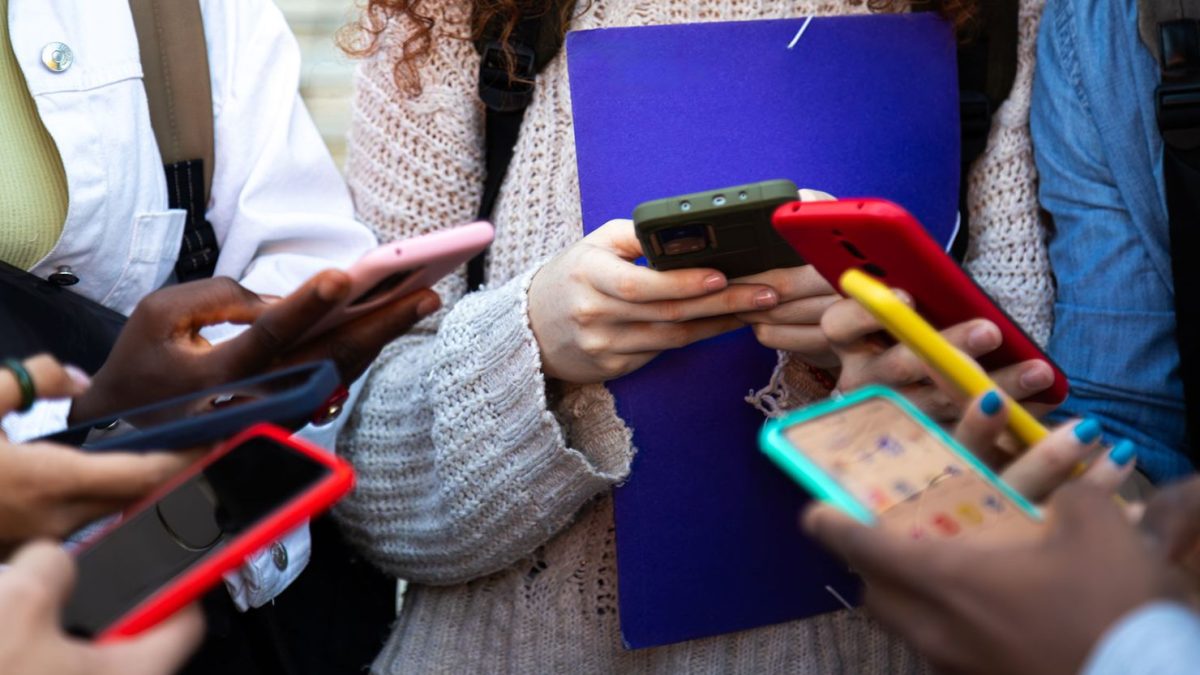














Recently, Texas passed a bill requiring all school systems to adopt and implement a policy that prohibits students from using personal communication devices on school property during the school day. The bill cites that “many studies have documented the harmful effects of cell phone and social media use on student well-being and academic progress.”
However, there are times when allowing students to use their phones during the school day can actually be beneficial. Many students rely on their phones to contact their parents — whether to let them know they’re feeling unwell, confirm a pickup time, or communicate about schedule changes. If a club meeting or event is canceled, it can now take longer for parents to find out and make necessary arrangements. With this new rule, students must go through the school for even minor inconveniences, which can make them feel anxious and less independent.
Interestingly, North East ISD is currently the only school district in Texas that has implemented a cell phone policy defining instructional time as only the time students spend in class — meaning lunch and passing periods are not included. This more flexible approach allows students limited opportunities to use their phones responsibly without disrupting learning.
The concern is that this statewide policy may end up wasting more instructional time rather than saving it. Is this really the best way to solve the problem?
There are other ways to address concerns around phone use without imposing a complete ban across all public schools. Allowing individual districts or campuses to develop their own guidelines could be more effective, and giving teachers discretion to decide when phone use is appropriate in their classrooms might better serve students’ needs.
Not only is this policy frustrating and time-consuming, but it can also create additional challenges — especially for students who already face difficulties managing their schedules or transportation.
It’s time to speak up. This policy doesn’t just affect students’ education; it also impacts their ability to communicate with their parents.
Should students really be blamed for this issue — or should parents share some of the responsibility for how phone use has been handled?
Disclaimer: The opinions and viewpoints expressed in this article are solely those of the student author(s). They do not represent or reflect the official positions, policies, or perspectives of the North East Independent School District, Winston Churchill High School, or any members of their administration or faculty. For questions or concerns regarding this publication, please contact the faculty advisor to the newspaper, Mr. Landrus-McGee, at [email protected]